Homeostatic Inflammation in Cardiovascular Disease
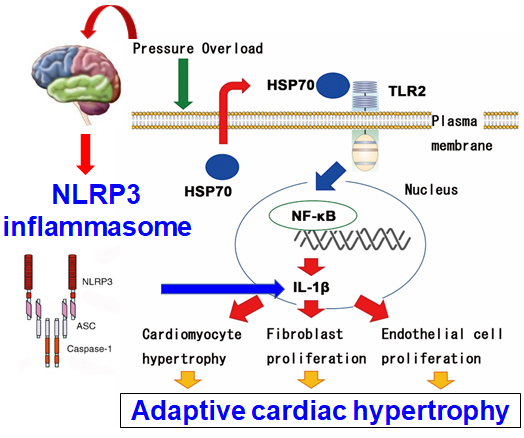 Higashikuni Y, et al. Circulation 2023; Higashikuni Y, et al. JAHA 2013.
Homeostatic inflammation is an inflammatory response caused by an interaction between pattern recognition receptors (PRRs), including Toll-like receptors (TLRs) and NOD-like receptors (NLRs), and endogenous molecules, called danger-associated molecular patterns (DAMPs). We have shown the roles and the regulatory mechanisms of homeostatic inflammation in cardiovascular disease. For example, TLR2 signaling in non-immune cells contributes to initiation of inflammatory responses and adaptive hypertrophy in the heart, in response to pressure overload (JAHA, 2013). TLR9 signaling in immune cells plays important roles in the pathogenesis of atherosclerosis and obesity (Sci Adv, 2016; JAHA, 2019). However, how homeostatic inflammation causes cardiovascular disease remains largely unclear.
In this project, we will elucidate the mechanisms in which homeostatic inflammation causes cardiovascular disease, by focusing on the regulatory mechanisms of the NF-kB system. Our findings will provide novel insights and therapeutic strategies in cardiovascular disease.

Yasutomi Higashikuni, M.D., Ph.D., FESC
Assistant Professor of Cardiovascular and Genetic Research
My research interests include homeostatic inflammation, RNA metabolism and modification, and synthetic biology.
Related
- BCVR2025 Linking inflammation to metabolic changes in heart disease
- LPS Induces Limited Activation of Hypoxia-Inducible Factor-1a (HIF-1a) in Macrophages
- Hyperuricemia, the Old and New Issue in Cardiovascular Medicine
- JCC2025 Cardiac inflammatory signaling in health and disease
- ESC2025 RNA metabolism in heart disease